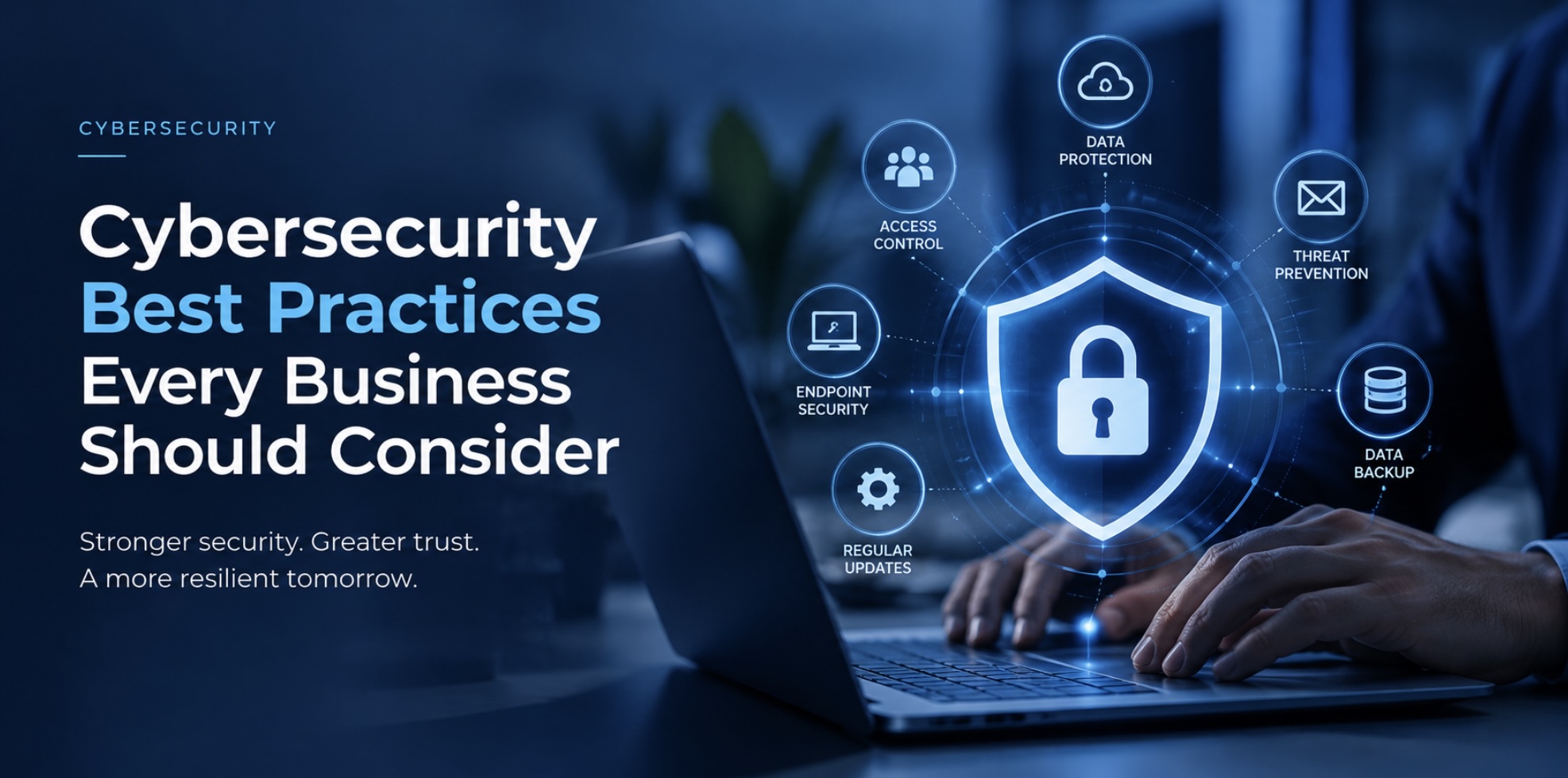
Cybersecurity is no longer an issue that only large technology companies need to worry about. Businesses of every size rely on connected devices, cloud applications, email, online platforms, and digital data, making cybersecurity an important part of everyday operations.
A security incident can disrupt business activities, expose sensitive information, damage customer trust, and create significant financial and operational challenges.
While no organization can eliminate every cybersecurity risk, businesses can significantly improve their security posture by following practical security practices and building a culture of awareness.
Understand What You Need to Protect
The first step toward better cybersecurity is understanding what you are protecting.
Every business should identify its important digital assets. These might include:
- Customer information
- Financial records
- Employee information
- Business documents
- Intellectual property
- Email accounts
- Cloud applications
- Internal systems
- Websites and online platforms
Once these assets are identified, organizations can determine which systems require the strongest protections and which employees should have access to them.
Without understanding the technology environment, it becomes difficult to build an effective security strategy.
Use Strong Passwords and Authentication
Passwords remain one of the most common entry points for attackers.
Employees should avoid using simple passwords or reusing the same password across multiple accounts. Organizations should encourage strong, unique passwords and consider using password management solutions where appropriate.
Multi-factor authentication can provide another important layer of protection.
With multi-factor authentication, a password alone is not enough to access an account. An additional verification method is required, making unauthorized access more difficult even when login credentials are compromised.
For important business accounts, enabling multi-factor authentication should be a priority.
Keep Software and Devices Updated
Software updates are sometimes treated as an inconvenience, but they can play an important role in security.
Operating systems, applications, network devices, and security tools regularly receive updates that may address known vulnerabilities, improve performance, or add security features.
Businesses should establish a process for keeping important systems updated.
This includes:
- Computers
- Servers
- Routers
- Firewalls
- Mobile devices
- Business applications
- Website software
- Security tools
An outdated system can create unnecessary security risks.
Protect Business Networks
Network security is another critical component of cybersecurity.
Businesses should ensure that their internal networks are properly configured and protected. Wireless networks should use appropriate security settings, and guest access should be separated from internal business systems when necessary.
Firewalls and other network security technologies can also help control traffic and reduce unauthorized access.
Organizations should regularly review their network architecture as their technology environment changes.
For example, adding new offices, cloud services, remote employees, or connected devices can change the organization’s overall security requirements.
Don’t Forget About Employees
Technology alone cannot solve every cybersecurity problem.
Employees are an important part of an organization’s security environment. Phishing emails, suspicious attachments, fake login pages, and social engineering attacks often attempt to trick users into revealing information or granting unauthorized access.
Regular cybersecurity awareness training can help employees recognize suspicious activity.
Employees should understand basic warning signs such as:
- Unexpected password-reset requests
- Suspicious email attachments
- Unusual payment requests
- Unknown login notifications
- Requests for sensitive information
- Links leading to unfamiliar websites
A well-informed employee can become an important line of defense.
Back Up Important Data
A cybersecurity strategy should also include data backup and recovery.
Businesses should have reliable copies of important information and understand how that information can be restored when necessary.
Backups can help organizations recover from various situations, including hardware failure, accidental deletion, system problems, and certain cyber incidents.
However, simply having a backup is not enough. Businesses should periodically verify that backups are working and that important information can actually be restored.
A backup strategy should be designed around the organization’s operational needs and the importance of its data.
Limit Access to Sensitive Information
Not every employee needs access to every system or file.
Organizations should consider implementing access controls based on job responsibilities. Employees should receive the access necessary to perform their work without automatically receiving access to unrelated sensitive information.
This approach can reduce unnecessary exposure and make it easier to manage user permissions.
When an employee changes roles or leaves the organization, their access should also be reviewed and adjusted promptly.
Have a Response Plan
Even with strong security practices, incidents can still happen.
Businesses should have a plan for responding to potential security events.
The plan should identify:
- Who should be contacted?
- Which systems should be isolated?
- How should the incident be documented?
- How will customers or partners be informed if necessary?
- How will systems be restored?
- What steps should be taken afterward?
Having a plan before an incident occurs can help an organization respond more efficiently during a stressful situation.
Regularly Review Your Security
Cybersecurity is not a one-time project.
Technology environments change continuously. New applications are introduced, employees join or leave, devices are replaced, and new threats emerge.
For this reason, businesses should periodically review their security practices.
A professional technology or security assessment can help identify weaknesses, outdated systems, configuration issues, and areas where additional protection may be appropriate.